Severe Acute Respiratory Syndrome (SARS): Symptoms and Treatments
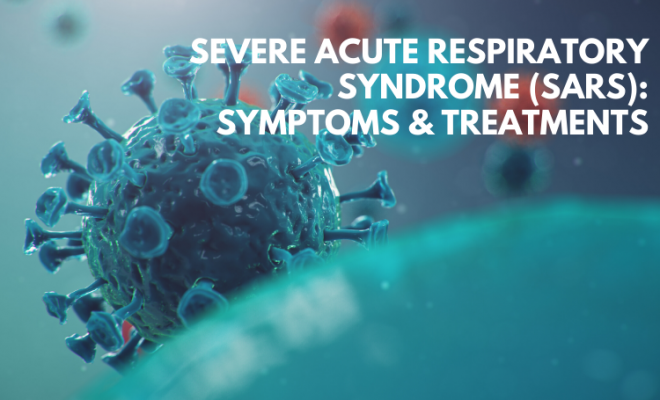
Severe Acute Respiratory Syndrome (SARS) is a viral respiratory disease caused by SARS-CoV-1. First reports of the SARS outbreak began at Foshan in the Guangdong province of southern China in November 2002. The last confirmed case was reported in May 2004. The total number of cases tallied up to 8098 with 774 deaths and a 9.6% fatality rate (Gu and Korteweg, 2007). The disease had affected 29 different countries (Matteelli and Saleri, 2008).
Transmission
SARS-CoV-1 originated from horseshoe bats in Yunnan province of China, through the intermediate palm civet hosts, and cross-infected humans. SARS-CoV-1 spread via respiratory droplets from patients, in the second week after the onset of initial symptoms and direct contact or contact with contaminated surfaces. No asymptomatic spread was observed (WHO, 2003).
Structure
SARS-CoV-1 are betacoronavirus (order Nidovirales) that are enveloped and pleomorphic. Its positive-sense single-stranded genomic RNA of 26-32kb is encapsulated by helical nucleocapsid, surrounded by a viral envelope containing envelope (E), spike (S) and transmembrane (M) proteins (Perlman and Netland, 2009). Spike proteins interact with angiotensin-converting-enzyme-2 (ACE2) receptor, found abundantly on epithelial cells of the respiratory tract, for the entry and pathogenesis of SARS-CoV-1 (Jia et al., 2005).
Signs and Symptoms
The incubation period of SARS-CoV-1 ranges from three to eleven days (Matteelli and Saleri, 2008). The severity of SARS vary widely among patients. Infected patients generally present with a prodrome of non-specific symptoms such as myalgia, lethargy, malaise and headache, then high fever and mild respiratory symptoms such as dry cough and dyspnoea (Hsu et al., 2003). Gastrointestinal symptoms such as diarrhoea, nausea and vomiting may manifest (Hui, Wong and Wang, 2003).
In the second week after the onset of initial symptoms, symptoms progress to atypical viral pneumonia, and subsequently to secondary typical bacterial pneumonia. Other disease complications that may develop during the progression of the disease include acute respiratory failure, acute respiratory distress syndrome (ARDS), sepsis, acute kidney injury and refractory hypoxemia (Hui, Wong and Wang, 2003). Laboratory testing revealed leukopenia, lymphopenia, thrombocytopenia, hypokalemia, hyponatremia, elevated creatinine kinase, alanine transaminases and lactate dehydrogenase levels in the serum (Hsu et al., 2003).
Treatment
Six out of many tested treatments for SARS were shown to have some effect when administered in combination:
- Antiviral agents such as Ribavirin
Ribavirin, an antiviral agent that prevents viral replication, is a nucleoside analogue that was administered intravenously at 8mg/kg, thrice a day for 5 days and orally at 1200mg, thrice a day for the next 5-9 days. However, ribavirin produces adverse side-effects such as haemolytic anaemia, hypomagnesaemia and hypocalcaemia. Furthermore, its efficacy as a treatment for SARS was controversial (Tai, D., 2007).
- Protease inhibitors such as Kaletra
Kaletra (400mg ritonavir and 100mg lopinavir) contains protease inhibitors which inhibits virion assembly (a process of assembly for viruses), preventing the SARS virus from propagating. When used together with ribavirin for 14 days, it had shown impressive results. Its adverse effects include severe pancreatitis and liver dysfunction (Tai, D., 2007).
- Broad spectrum antivirals such as Interferons
Interferons (IFN), which are also produced naturally in the body, are potent broad spectrum antivirals. A combination of IFN-α (3 million units/day) and high corticosteroid dosage (160-1000mg/day) for 5-14 days in the early phase had shown more promising results than ribavirin (Tai, D., 2007).
- Corticosteroids such as Methylprednisolone
Corticosteroids ameliorate immune-mediated lung damage caused by cytokine dysregulation. Current recommendations utilises moderate to high dosage of methylprednisolone (250-500mg/day) for 3-6 days in severely ill patients (Tai, D., 2007).
Other treatments include immunoglobulins and convalescent-phase plasma (Tai, D., 2007). These treatments are mostly symptomatic, due to the lack of specific effective antiviral therapy. 90% of the patients recover without the administration of antivirals or corticosteroids. Only in critically ill patients were these therapies administered (Tai, D., 2007).
Prevention
Prevention measures are similar to that of MERS-CoV and COVID-19:
- Contact tracing
- Social distancing
- Practising hand and face hygiene
- Wearing face masks
- Quarantine
These measures have to be strictly abided, otherwise outbreaks are greatly prolonged, causing disproportionately large numbers of infections (3Blue1Brown, 2020).
References
- Gu, J. and Korteweg, C., 2007. Pathology and Pathogenesis of Severe Acute Respiratory Syndrome. The American Journal of Pathology, 170(4), pp.1136-1147.
- Hsu, L., Lee, C., Green, J., Ang, B., Paton, N., Lee, L., Villacian, J., Lim, P., Earnest, A. and Leo, Y., 2003. Severe Acute Respiratory Syndrome (SARS) in Singapore: Clinical Features of Index Patient and Initial Contacts. Emerging Infectious Diseases, 9(6), pp.713-717.
- Hui, D., Wong, P. and Wang, C., 2003. SARS: clinical features and diagnosis. Respirology, 8(s1), pp.S20-S24.
- Jia, H., Look, D., Shi, L., Hickey, M., Pewe, L., Netland, J., Farzan, M., Wohlford-Lenane, C., Perlman, S. and McCray, P., 2005. ACE2 Receptor Expression and Severe Acute Respiratory Syndrome Coronavirus Infection Depend on Differentiation of Human Airway Epithelia. Journal of Virology, 79(23), pp.14614-14621.
- Matteelli, A. and Saleri, N., 2008. Respiratory Diseases. Travel Medicine, pp.566-567.
- Perlman, S. and Netland, J., 2009. Coronaviruses post-SARS: update on replication and pathogenesis. Nature Reviews Microbiology, 7(6), pp.439-450.
- 3Blue1Brown, 2020. Simulating an epidemic. [online video] Available at: <https://www.youtube.com/watch?v=gxAaO2rsdIs>. [Accessed 7 April 2020]
- Tai, D., 2007. Pharmacologic Treatment of SARS: Current Knowledge and Recommendations. Annals Academy of Medicine Singapore, [online] 36(6), pp.438-443. Available at: <http://www.annals.edu.sg/pdf/36VolNo6Jun2007/V36N6p438.pdf> [Accessed 7 April 2020].
- WHO, 2003. Consensus Document On The Epidemiology Of Severe Acute Respiratory Syndrome (SARS). [online] Available at: <https://www.who.int/csr/sars/en/WHOconsensus.pdf> [Accessed 7 April 2020].
This article is contributed by Goh Jun Hong from MDIS School of Life Sciences.