Master’s Degree in Cybersecurity vs CISSP: Choosing Your Path in Singapore

In Singapore’s Smart Nation landscape of 2026, the demand for digital defenders has never been higher. With cybersecurity now officially on the Ministry of Manpower’s Shortage Occupation List (SOL), professionals are often caught between two prestigious milestones: a master’s degree in cybersecurity and the Certified Information Systems Security Professional (CISSP) certifications.
While both credentials signal expertise, they cater to different career goals. This guide explores the nuances of each to help you decide which path aligns best with your professional aspirations in the local market.
Master’s Degree in Cybersecurity vs CISSP: The Core Differences

The primary distinction lies in the depth of academic mastery versus professional breadth.
A master’s degree in cybersecurity is a comprehensive academic qualification. It provides a structured, deep-dive into the theoretical foundations and practical applications of the field. Students explore niche areas such as AI-driven threat intelligence, digital forensics, and secure software development through hands-on labs and research projects.
In contrast, the CISSP, managed by ISC2, is a professional certification. It is designed to validate a broad spectrum of security knowledge across eight domains. It is highly regarded as a gold standard for practitioners who already have significant field experience and wish to prove their competency in security management.
Comparison at a Glance
| Feature | Master’s Degree | CISSP Certification |
| Primary Focus | Academic depth and technical specialisation. | Broad professional validation and management. |
| Duration | 12 to 24 months (Full-time or Part-time). | Self-paced study (Exam is 3–6 hours). |
| Prerequisites | Typically a Bachelor’s degree. | 5 years of cumulative paid work experience. |
| Average Cost in SG | ~S$28,000 (PEI) to ~S$65,000 (Public). | ~S$1,000 (Exam fee only). |
| Career Path | Leadership, technical experts, researchers. | Security managers, auditors, and architects. |
Is a Master’s Degree in Cybersecurity Worth It in Singapore?

As we move through 2026, an advanced degree is increasingly viewed as a differentiator. With cybersecurity hiring surging by over 50% year-on-year, the worth of a degree is measured by its ability to unlock leadership tiers.
The Leadership Advantage
While certifications are excellent for securing technical roles, many Tier-1 firms and statutory boards in Singapore look for a Master’s degree when hiring for C-suite or Senior Management positions. A degree demonstrates a commitment to long-term critical thinking and the ability to navigate complex, multi-year security strategies.
Salary Trajectory
In 2026, senior cybersecurity engineers in Singapore can command average annual packages between S$140,000 and S$250,000. An advanced degree often provides the necessary leverage to enter these higher salary brackets sooner by preparing you for high-stakes decision-making.
Total Cost and Duration in Singapore
Education costs in Singapore vary based on the institution type. For a clearer picture, here are the estimated total investment amounts:
- Public Universities (e.g., NUS, NTU): Tuition fees for a self-funded Master of Science in Cybersecurity (also known as MSc Cybersecurity) typically average around S$65,000 inclusive of GST.
- PEI (Private Education Institutions): These institutions offer more accessible pathways. For example, a quality Master’s programme at a PEI averages approximately S$28,000.
How Long Does it Take?
For those balancing a career, a part-time master’s degree is the most common route.
- Full-time: Generally takes 12 months.
- Part-time: Usually completed in 18 to 24 months.
Institutions like the Management Development Institute of Singapore (MDIS) offer programmes designed for working professionals, allowing students to achieve their qualification in as little as 12 months (Full-time) or 18 months (Part-time).
Pros, Cons, and Common Mistakes
Pros of an MSc Cybersecurity
- Deep Specialisation: Unlike broad certs, you can master specific high-demand areas like Ethical Hacking and Cyber Risk Management.
- Networking: You build a network of local peers, faculty, and industry partners within the Singapore ecosystem.
- Permanent Credential: A degree never expires, whereas certifications like CISSP require ongoing fees and Continuing Professional Education (CPE) credits to remain active.
Cons of an MSc Cybersecurity
- Time Commitment: Requires consistent effort over a year or more.
- Higher Upfront Investment: Requires more financial planning compared to a single certification exam fee.
Common Mistakes to Avoid
- Overlooking Experience Requirements: Professionals often pursue a CISSP without realising they need five years of verified experience to hold the full title. For those building that experience, a Master’s degree is a powerful way to accelerate foundational knowledge.
- Discounting the PEI Route: There is a misconception that only public universities carry weight. In reality, many employers value the industry-aligned curriculums found at a PEI in Singapore, which often partner with top-tier global universities to provide practical, job-ready skills.
- Ignoring Soft Skills: In 2026, the industry needs hybrid professionals who can translate technical risk into business language—a skill specifically nurtured in Master’s level coursework.
Choosing MDIS for Your Master’s Degree in Cybersecurity
Deciding between a Master’s and a CISSP often comes down to where you are in your journey. If you have years of experience and need a quick professional badge, the CISSP is a strong choice. However, if you seek a structured, academic transformation that prepares you for high-level governance and leadership, a Master’s degree is the definitive investment.
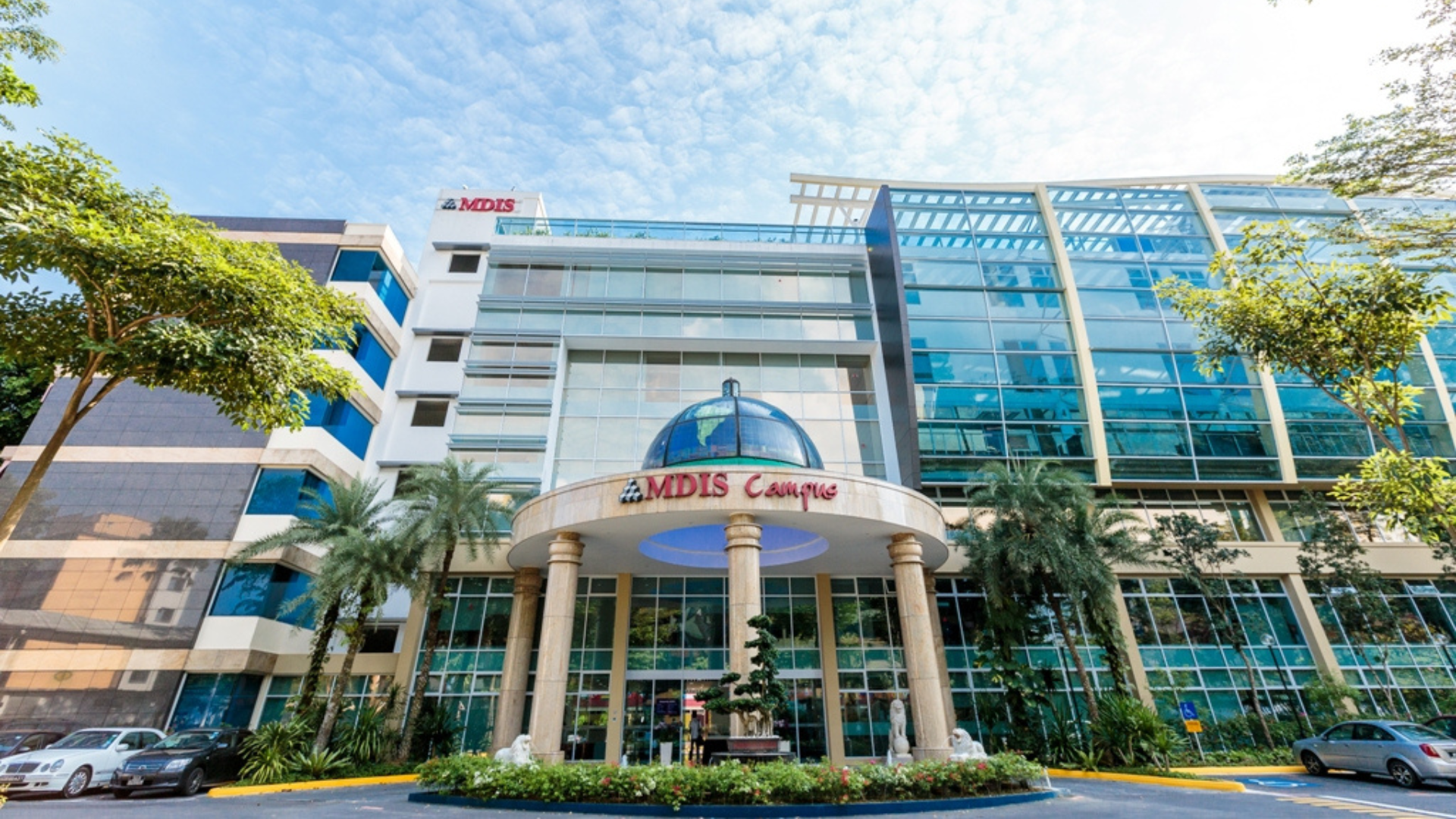
For those considering a part-time master’s degree at a private university or education provider, the Management Development Institute of Singapore (MDIS) stands out. As a prominent PEI in Singapore, MDIS provides a Master of Science Cyber Security awarded by Teesside University (UK).
The curriculum is tailored for the modern threat landscape, covering modules like Ethical Hacking Techniques and Cyber Risk and Vulnerability Management. It is an ideal choice for professionals looking to gain a globally recognised UK qualification right here in Singapore.
Ready to elevate your cybersecurity expertise?
Contact us to enquire about our courses today.