MDIS Blog

Main Menu

MENUMENU
  • Home
  • Topics
        • Business & Management
        • Career Management
        • College
        • Engineering
        • Event
        • Fashion & Design
        • Health & Nursing
        • Information Technology
        • Languages
        • Life Sciences
        • Lifestyle
        • MDC
        • Media & Communications
        • Psychology
        • Safety Management
        • Tourism & Hospitality
        • Uncategorized
  • Campus
  • Student Life
  • Preview Sessions
  • + Become A Contributor

logo

Header Banner

MDIS Blog

MENUMENU
  • Home
  • Topics
        • Business & Management
        • Career Management
        • College
        • Engineering
        • Event
        • Fashion & Design
        • Health & Nursing
        • Information Technology
        • Languages
        • Life Sciences
        • Lifestyle
        • MDC
        • Media & Communications
        • Psychology
        • Safety Management
        • Tourism & Hospitality
        • Uncategorized
  • Campus
  • Student Life
  • Preview Sessions
Information TechnologyFeatured Post
Home›Information Technology›Are Autonomous Vehicles the Unseen Future?

Are Autonomous Vehicles the Unseen Future?
By Fazrul Nizam
4th December 2020
1072
1
Autonomous Vehicle

Automobile companies have been investing in the autonomous vehicle industry recently with BMW, adding a driverless self-parking feature to their model S series, to more ambitious brands such as Tesla, aiming to be the first to get their fully autonomous car on the roads.  In Singapore, the government is investing into Artificial Intelligence (AI), including autonomous vehicles, with trials ongoing. So how do driverless vehicles work and how close are we to getting there?

Table of Contents

  • How it works?
  • Pros and Cons
  • Autonomous vehicles in Singapore
  • Conclusion
  • References

How it works?

Firstly, there are six levels of driving automation defined by the Society of Automotive Engineers (SAE).  Level 0 being ‘No driving automation’ and level 5 being fully autonomous. (SAE International, 2018)

After the driver sets a location, the vehicle will automatically proceed to its destination. The vehicle makes use of radar systems and AI to make decisions, such as, when to apply the brakes or when to accelerate.  Besides radar, it also uses a Light Detection and Ranging (Lidar) system to basically create a 3D map of the vehicle’s surroundings using laser pulses. With other similar autonomous vehicles on the road, they are also capable of communicating with one another to provide information such as location of accidents and traffic jams.  (Ondruš, Kolla, Vertaľ, & Šarić, 2020).

Pros and Cons

The main advantage of self-driving vehicles would be the reduction of traffic accidents. This is due to the elimination of human errors such as distractions and poor judgement. Also, with more autonomous vehicles on the road, the flow of traffic would be smoother, thus decreasing traffic congestion and the usage of fuel.

The main disadvantage, as with other tasks taken up by automation, would be the loss of jobs for humans. Taxi drivers and delivery drivers would face a huge risk to their job security.

Autonomous vehicles in Singapore
Autonomous Shuttle Bus
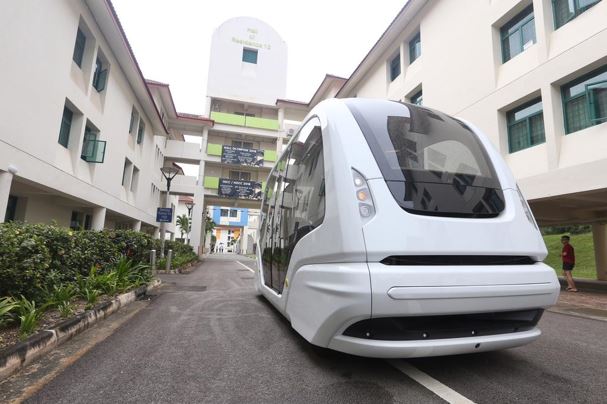
Figure 1: NTU’s autonomous shuttle bus

In Singapore, the government is investing heavily into technology, including autonomous vehicles, in building a ‘Smart Nation’. The National Technological University currently has a driverless shuttle bus which ferries the students across a designated route within the campus. A few companies, such as nuTonomy, have also been approved to test their vehicles in Singapore. In more recent news, a company called QIQ plans to roll out short-distance, ride-sharing cars in Singapore. It is driven manually by a driver, but the company aims for the cars to be autonomously driven to the nearest docking station after the passengers reach their destination.

Conclusion
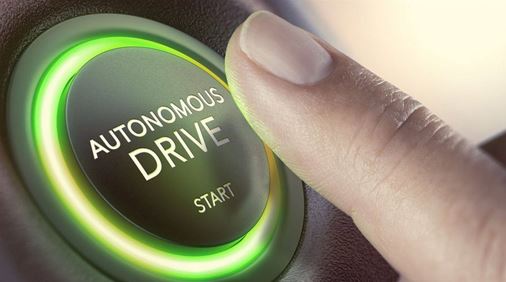
Figure 2: Button showing “Autonomous Driving”

It will be a long way before level 5 autonomous vehicles will be at the click of a button. Waymo and Tesla have shown that the future of self-driving cars is closer than we think. Nonetheless, numerous testing will have to be conducted by the various companies and accidents are bound to happen during these trials. Even with the release of autonomous vehicles, the companies would still have to gain the trust of the population and the laws would have to be modified to allow such vehicles on the roads.

References

Ondruš, J., Kolla, E., Vertaľ, P., & Šarić, Ž. (2020). How Do Autonomous Cars Work? Transportation Research Procedia, 229. doi: 10.1016/j.trpro.2020.02.049

SAE International. (11 December, 2018). SAE International Releases Updated Visual Chart for Its “Levels of Driving Automation” Standard for Self-Driving Vehicles. Retrieved from SAE International: https://www.sae.org/news/press-room/2018/12/sae-international-releases-updated-visual-chart-for-its-%E2%80%9Clevels-of-driving-automation%E2%80%9D-standard-for-self-driving-vehicles [Accessed 8 Oct 2020]


Previous Article

Making Meaning During a Pandemic: Singapore Cancer ...

Next Article

Ergonomic Issues when Working from Home

Fazrul Nizam

Fazrul Nizam

Related articles More from author

  • travel asia
    Tourism & HospitalityFeatured Full Width SliderFeatured Post

    Travel: An Adventurous Experience

    7th October 2017
    By Jireh Tay
  • Life SciencesFeatured Post

    Top 10 Jobs for Biomedical Science Degree Graduates in SG

    27th July 2021
    By MDIS
  • MBA
    Business & ManagementFeatured Full Width SliderFeatured Post

    How a right Master of Business Administration (MBA) can benefit your career

    8th September 2017
    By MDIS
  • Machine
    Featured BK RowInformation Technology

    What is Machine Learning?

    26th June 2018
    By MDIS
  • MDIS Open House 2018
    Featured PostEventFeatured BK RowFeatured Full Width Slider

    More than 10 engaging school activities for your participation at MDIS Open House 2018

    22nd February 2018
    By Yeo Hong Peng
  • A damaged lock on a circuit board.
    Career ManagementInformation Technology

    Top 5 Career Opportunities after Cybersecurity Degree Course

    12th June 2023
    By Muhd Erfan

You may also like

  • Student Life

    MDIS Alumière: Janesis Wong

  • Event

    MDIS Postgraduate Fair 2022 – The Future is Postgraduate

  • MDC

    Girls style Dance Workshop & MDIS Alumni Family Day

Categories

  • Business & Management (43)
  • Campus (9)
  • Career Management (39)
  • College (17)
  • Engineering (16)
  • Event (35)
  • Fashion & Design (37)
  • Featured BK Row (64)
  • Featured BK Video (10)
  • Featured Full Width Slider (57)
  • Featured Post (93)
  • Health & Nursing (8)
  • Information Technology (34)
  • Languages (16)
  • Life Sciences (26)
  • Lifestyle (11)
  • MDC (14)
  • Media & Communications (30)
  • Pre-degree / Preparatory Courses (1)
  • Psychology (10)
  • Safety Management (9)
  • Student Life (22)
  • Think by MDIS (1)
  • Tourism & Hospitality (29)
  • Uncategorized (11)

Follow us on Instagram

This error message is only visible to WordPress admins

Error: No connected account.

Please go to the Instagram Feed settings page to connect an account.

TAGS

  • biomedical sciences
  • Business Administration
  • cybersecurity
  • MDIS Students
  • life sciences
  • lecturer's life
  • engineering
  • career management
  • Career Assistance Unit
  • MDIS School of Fashion and Design
  • MDIS Graduation Ceremony
  • Fashion Design
  • technology
  • MDIS Events
  • MDIS
  • MDIS College
  • MBA
  • fashion industry
  • fashion
  • Travel Guides
  • MDIS Business School
  • Lifestyle
  • cookery
  • Artificial intelligence
  • Digitalisation
  • MDIS Business Club
  • career planning
  • MDIS School of Tourism and Hospitality
  • Career Guides
  • Tourism and Hospitality
THINK SUCCESS. THINK MDIS.
Copyright© 2022. MDIS Blog. All Rights Reserved.
     
Where lifelong learning begins