Management Development Institute of Singapore (MDIS)
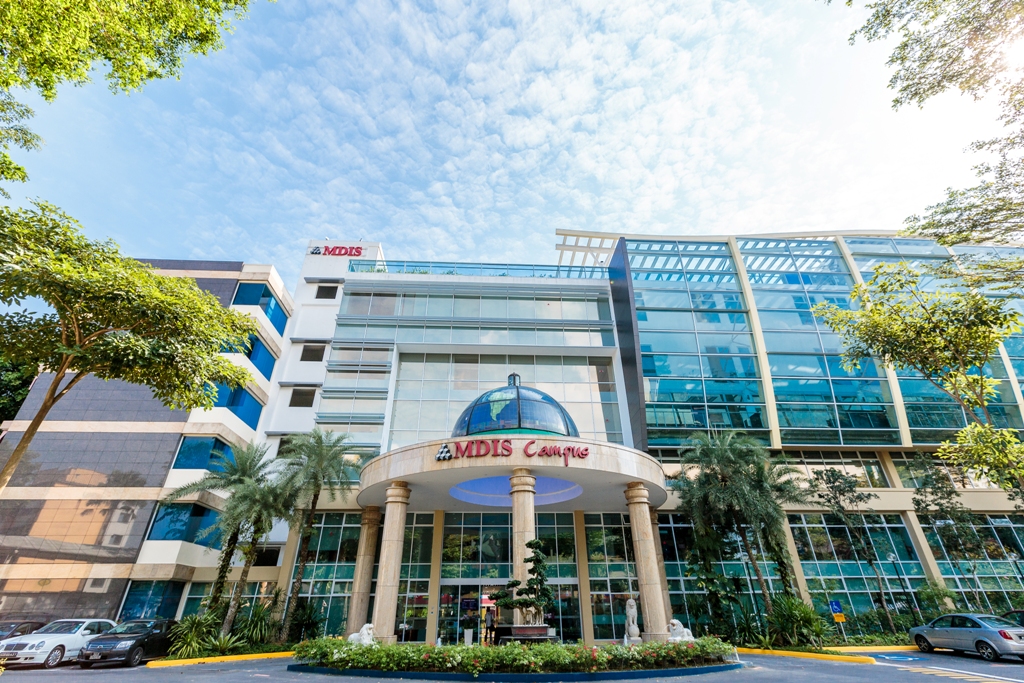
Founded in 1956, the Management Development Institute of Singapore (MDIS) is one of Singapore’s oldest not-for-profit professional institutes for lifelong learning. MDIS has two main subsidiaries: Management Development Institute of Singapore Pte Ltd which oversees its Singapore academic operations, and MDIS International Pte Ltd which focuses on MDIS’ globalisation strategy.
MDIS offers internationally-accredited courses in Accounting, Banking and Finance, Business, Management and Marketing, Education and Social Sciences, Engineering, Fashion and Design, Healthcare and Nursing, Information Technology, Life Sciences, Media and Communications, Safety and Environmental Management, and Tourism and Hospitality. These programmes are offered in collaboration with renowned universities in the United Kingdom and the United States of America. MDIS also has set a proven track record of preparing students to excel in the Singapore-Cambridge General Certificate of Education (Ordinary and Advanced Level), Cambridge International General Certificate of Secondary Education (IGCSE) and Cambridge International Lower Secondary, through its comprehensive preparatory courses
Awards and Certifications
MDIS is EduTrust certified, attesting to its exemplary education and business excellence standards. The institute was first awarded the certification in 2010 – subsequently renewed it for four years in 2014, 2018 and 2023. MDIS was also one of the first Private Education Institutions (PEIs) to be registered under the Enhanced Registration Framework.
The institute achieved a double win at the Singapore Prestige Brand Award (SPBA); it was one of four winners as well as the overall winner of the SPBA - Heritage Brands 2018. In 2017, MDIS was ranked 4th for the Enterprise 50 Award for its contributions in spurring Singapore’s economy. In 2019, MDIS had successfully transited from Singapore Service Class to Singapore Quality Class (Service) and is honoured to be one of the winners for the Corporate Merit Award at the Biennial Singapore Health Award.
Continuing with its long-standing tradition of giving back to society, the MDIS Education Trust Fund (inaugurated in 1999) supports deserving students facing financial difficulties in pursuing their education in Singapore. To date, MDIS has awarded more than 8,000 scholarships and bursaries totalling S$6.3 million. The institute also actively supports several charities and provides community assistance, in reaching out to the young, elderly, and disabled


Equally vested in corporate-level training, MDIS’ corporate training arm, the Management Development and Consultancy, was set up in 1995 to cater to the training needs of the workforce. In 2014, MDIS acquired the Service Quality Centre to diversify its offerings in training solutions in the region.
Apart from the main Singapore campus, MDIS has international campuses in Tashkent, Uzbekistan, Johor, Malaysia, as well as Dushanbe, Tajikistan. MDIS also has representative offices in Indonesia, as well as agents throughout Southeast Asia.
MDIS Facilities
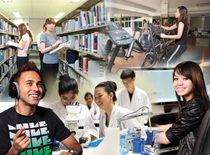
MDIS prides itself on a long-standing history of providing education and training services to the nation. Its S$35 million campus in Stirling Road occupies a three-hectare land boasting well-equipped classrooms, five computer laboratories, four life sciences laboratories, four engineering laboratories and workshops, three fashion studios, a psychology laboratory, a hospitality training centre, a media hub (TV and radio studios), a nursing practicum laboratory, as well as a bakery and culinary studio. The campus also has an amphitheatre to house art performances and other events, as well as fully-equipped sports facilities including a gymnasium and badminton courts
Vested with a technologically-competent and future-ready ethos, MDIS’ campus is Wi-Fi enabled, powering campus-wide online access. Through the Blackboard Learning System and video streaming technologies, readily accessible learning resources augment student’s learning experiences anytime, anywhere.
MDIS Integrated Campus of the Future
The S$80 million MDIS Residences@Stirling is the very first hostel in Singapore to be awarded the Green Mark GoldPlus Award. With 15-storeys, the hostel consists of 782 air-conditioned rooms, 14 suites, a 500-seater auditorium, and a cafeteria. The eco-friendly MDIS Residences@Stirling can accommodate some 1,700 students and is fully-integrated so that students can live, learn and play in an interactive and conducive environment.